The Psychology of Orchestral Notation
How to create parts that will have your players sighing with relief, not with exasperation.
Most notation teaching is about the software. This isn't. It's about the musician on the other end of the page: what they need to see, what they ignore, and how the right markings cut rehearsal time and get you the sound you actually hear.
What this actually is
Anyone can learn to engrave a clean-looking score. The software does most of it. What no manual teaches, and what takes years in front of an orchestra to understand, is how a part is read under pressure.
Every player reads the page through the lens of their instrument and their role in the orchestra. Because of how a symphony is built, a section violist, a third horn, and a timpanist each need different information, in different forms, at different moments. Give each of them exactly what they need, in the way they need to see it, and something happens: they feel confident.
A confident player isn't fighting the page. They're playing through it, and that's when you get the sound you imagined.
That is the craft. Not a prettier page, but a part that makes a player feel taken care of, so the orchestra gives you what you actually heard in your head.
Who it's for
This is for you if
You write for ensembles and want players to respond the way you hear it. You care less about a pretty page and more about parts that work in the room: fewer questions, less wasted rehearsal, more music.
Probably not if
You're after pure software mechanics, keyboard shortcuts and Dorico setup. That's a worthwhile thing to learn, but it isn't what I teach, and I'll point you somewhere better suited.
Why me
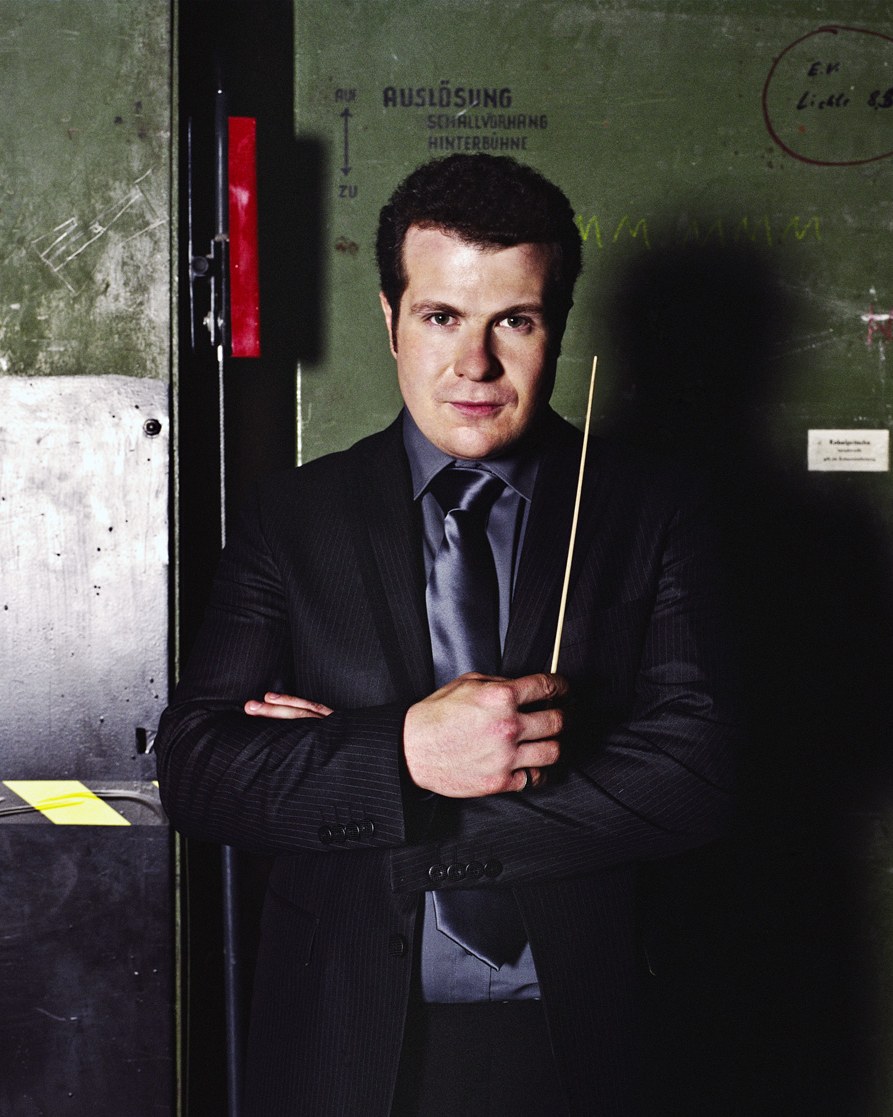
Stefan Solyom
Conductor & orchestrator
Photo: Tony Briggs
I've spent roughly thirty years on the podium and at the writing desk, conducting and arranging for orchestras and opera houses that don't forgive a badly prepared part. From 2009 to 2016 I was General Music Director of the Deutsches Nationaltheater and Staatskapelle Weimar, and from 2014 to 2020 Chief Conductor and Artistic Advisor of the Helsingborg Symphony Orchestra. Those were years spent living weekly with the consequences of how a part is written. The judgement I teach was earned watching notation succeed or fail in real time, in front of real players, with orchestras like
…and many others.
Work with me
Lessons are one-to-one and built around what you're writing. Tell me what you're working on and where you'd like to get to, and we'll find a time.
stefansolyom@me.com →